
A significant and very saddening fish die-off occurred on Sunday 11 June – Monday 12 June 2023 in the Upper River Mole between Charlwood and Horley along the realigned channel below the confluence of Man’s Brook. This post outlines the nature of the location, details of the event itself and explores some possible causes.
There is compelling evidence that this die-off was caused by an insidious combination of factors made more likely by climate change.

Location and background
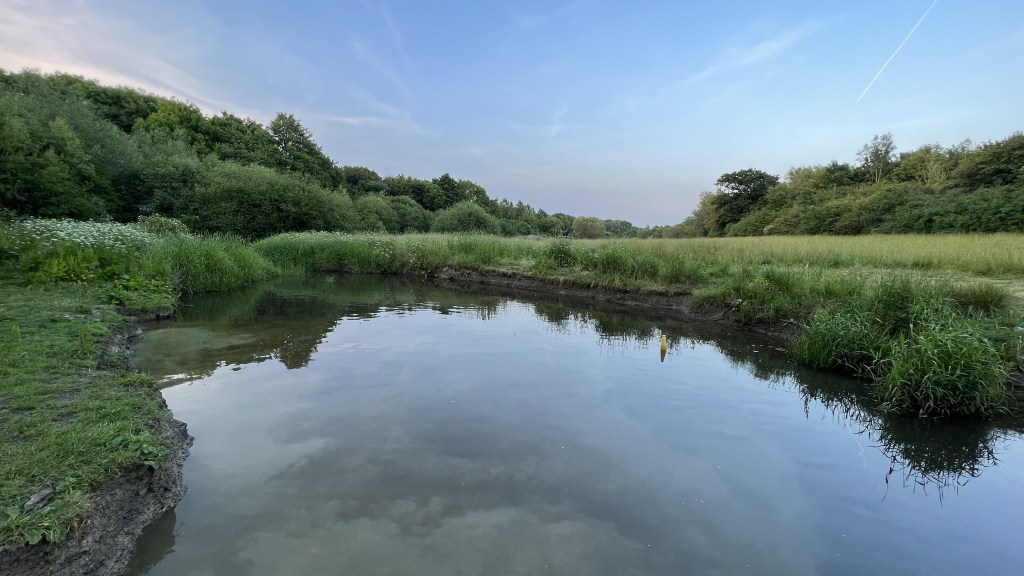
The fish die-off occurred along stretches of the Upper Mole and Man’s Brook between Charlwood and the confluence of the River Mole with the Gatwick Stream near Horley.
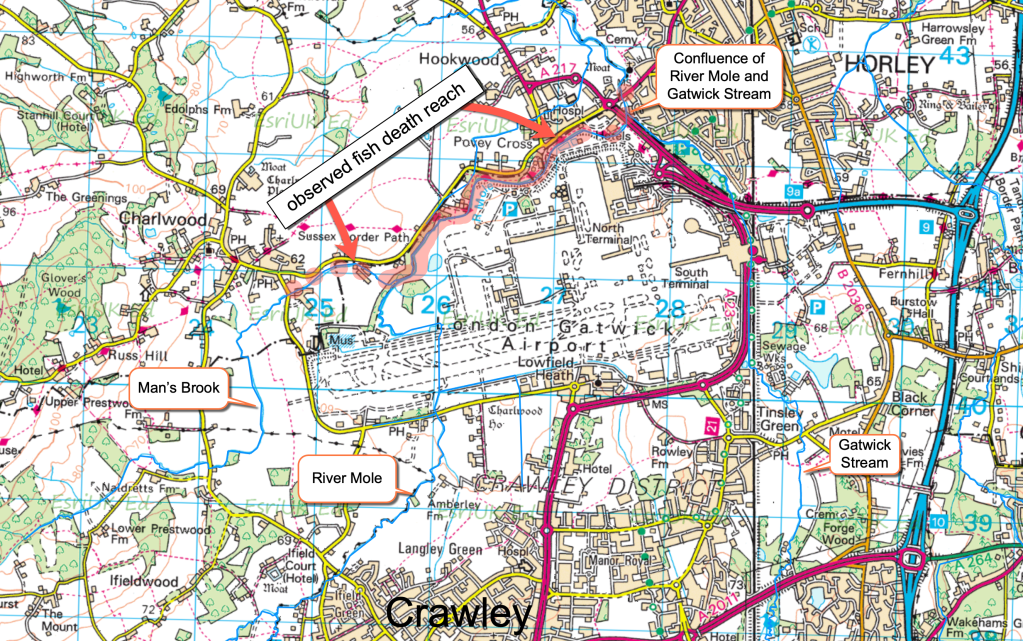
The River Mole and parts of Man’s Brook here are not following their natural course but were realigned to accommodate airport expansion before 2000.

Despite being adjacent to the airport, in normal times, this is a splendid stretch of river and is part of Gatwick’s “North West Biodiversity Zone”. It has become a lush wildlife corridor with light woodland, grassland and meadows and a reasonably meandering channel with some attractive riffles and pools.
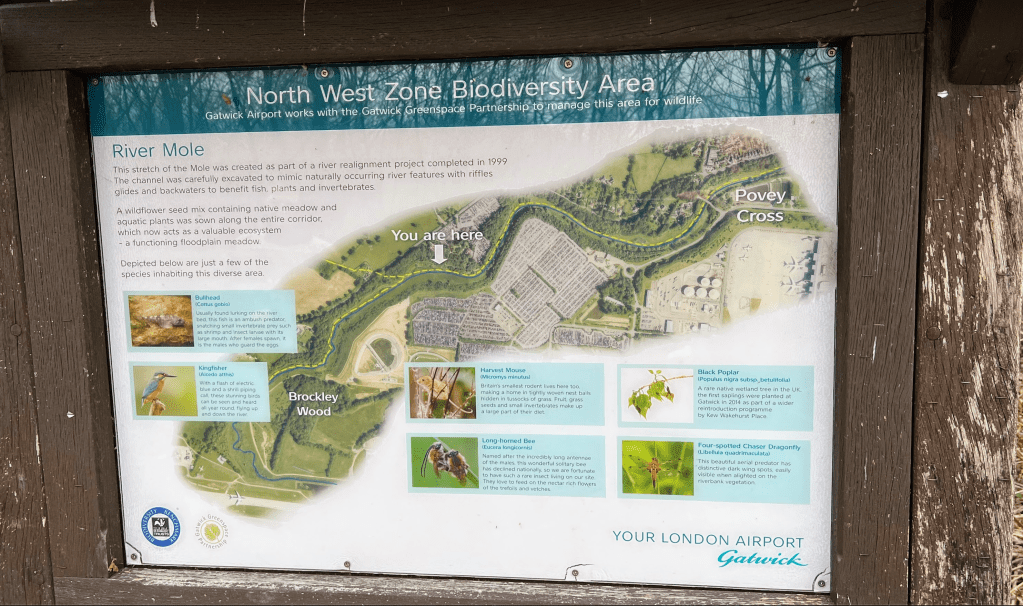
Gatwick ecologists and volunteer groups, like Gatwick GreenSpace, have created a rich riparian habitat achieving several important ecological success stories over the years.


The area is a well used linear park open to the public for exercise and dog walking. Whilst it gets muddy in winter it is a welcome stretch of accessible open space for residents of Hookwood, Charlwood, Horley and for hard-pressed wildlife!

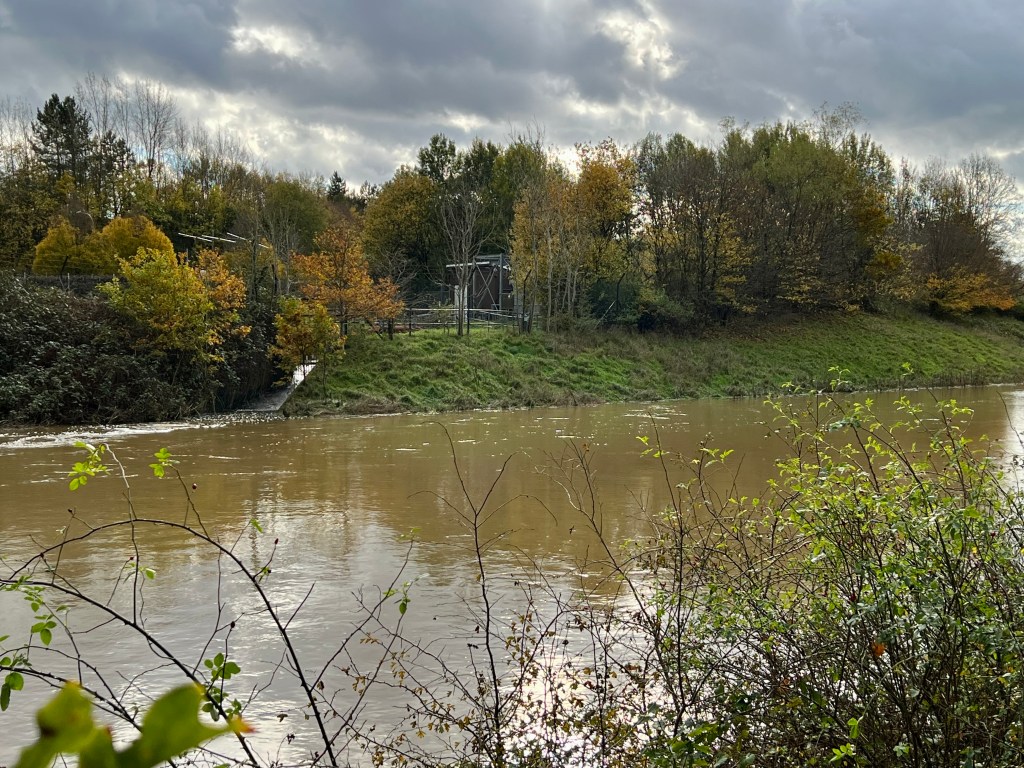
The valley cross-section itself was designed as a floodplain to accommodate the flashy nature of the Upper Mole which, on a clay catchment, can rise in hours from an average of 0.35m³/s to an annual expected flood of 10m³/s. The photo below shows a discharge of around 7-8m³/s in a wet period in Mid-November 2022. The record discharge at the upstream Gatwick gauge is over 22m³/s which occurred during the rare 200 year return period 1968 flood.
Importantly, and perhaps counter to what people might imagine, this stretch of river achieves some of the better water quality status of any part of the Upper Mole catchment. In Environment Agency surveys this stretch was recorded as Moderate. This may not sound great but many of the Mole watercourses routinely achieve Poor or Bad ecological status.

Unfortunately, one of the disadvantages of this reach is the very low gradient. When rivers are realigned they often take a longer course than their previous natural channel. This means slope angle is decreased and so is flow velocity.
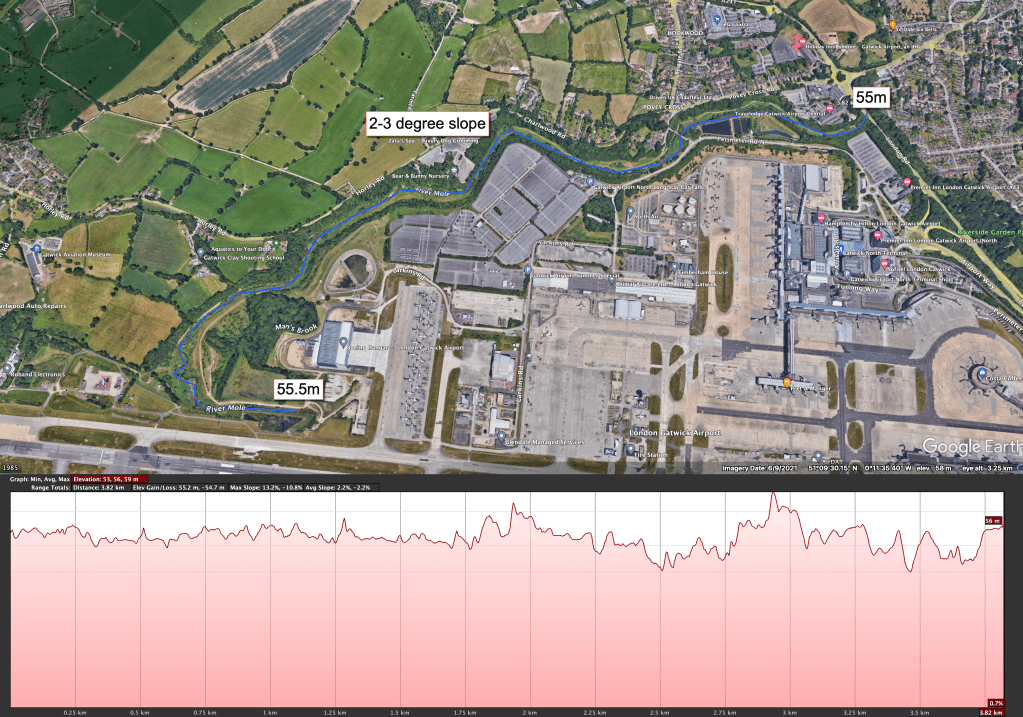
This is certainly the case with this stretch of the Mole. It has a very low gradient so the flow is slow. The gradient across the NW Biodiversity Zone is only around 2-3ᵒ. This means fewer natural riffles and turbulent sections where the water tumbles over stones and rocks and naturally oxygenates.

Observations at the scene of the die-off

I visited the scene on Monday and again on Tuesday, representing River Mole River Watch, our newly formed charitable organisation.
We were alerted to fish being in distress in the Upper Mole during Monday. On arrival at the scene, at first glance the stream looked almost “normal”. Emergency efforts were already under way by the Gatwick team to reoxygenate the stream with pumps.
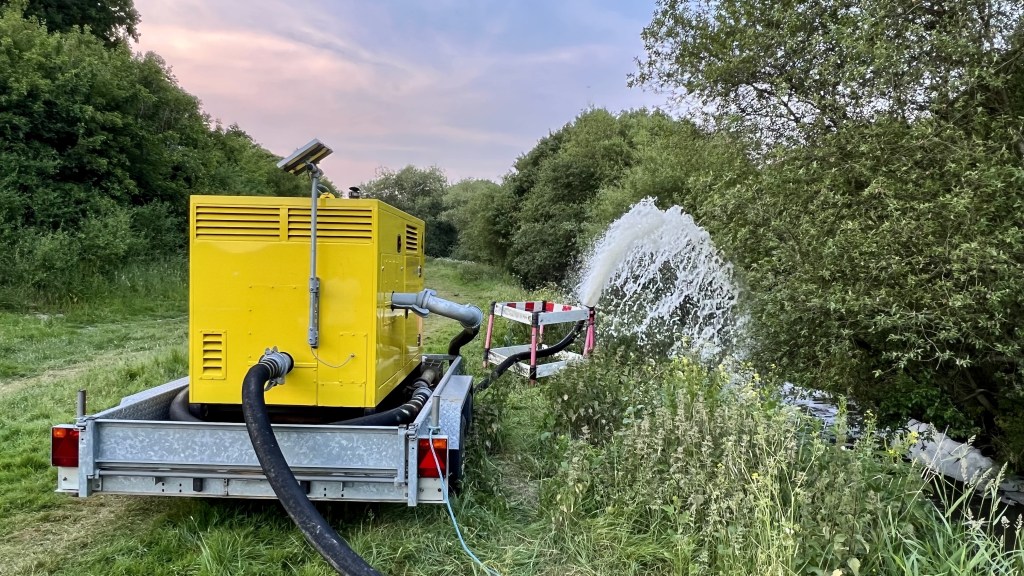


On closer observation it became obvious that many fish were dead or dying or struggling for life. Some fish were floating on the water while others had sunk to the bed and groups were seen gasping for breath.

The banks are quite thickly vegetated in places so observations of the river were made at intervals of roughly 10m in grassy places or where breaks in the vegetation allowed a look at the stream on the 1km walk upstream.
At each point where we looked at the water there were frequently four or five dead fish to be seen and sometimes larger groups of stressed fish struggling for life.
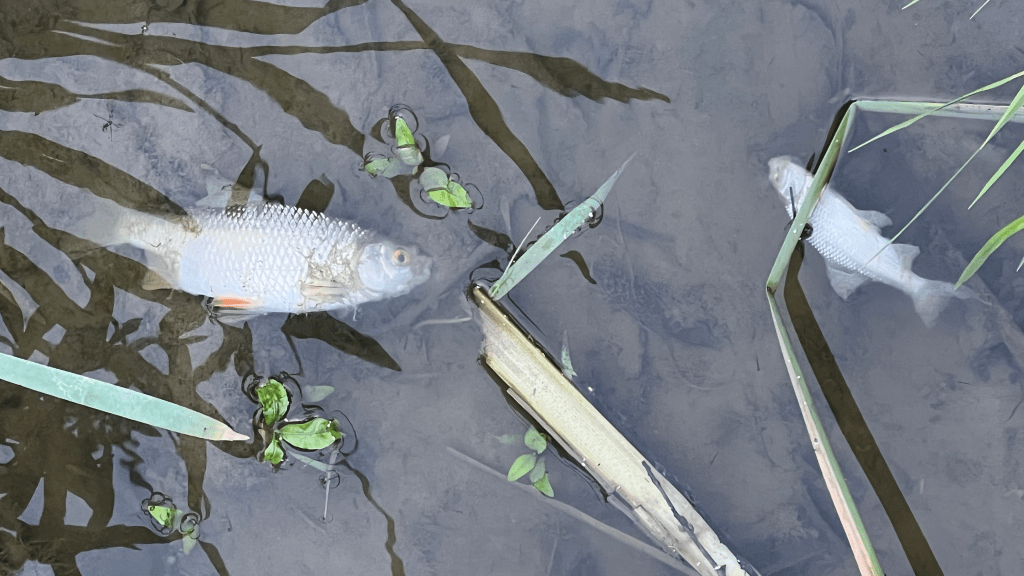
Numerous dead fish were seen floating in the water or trapped in reeds. Dace and Pike were amongst the casualties with large fish amongst them.
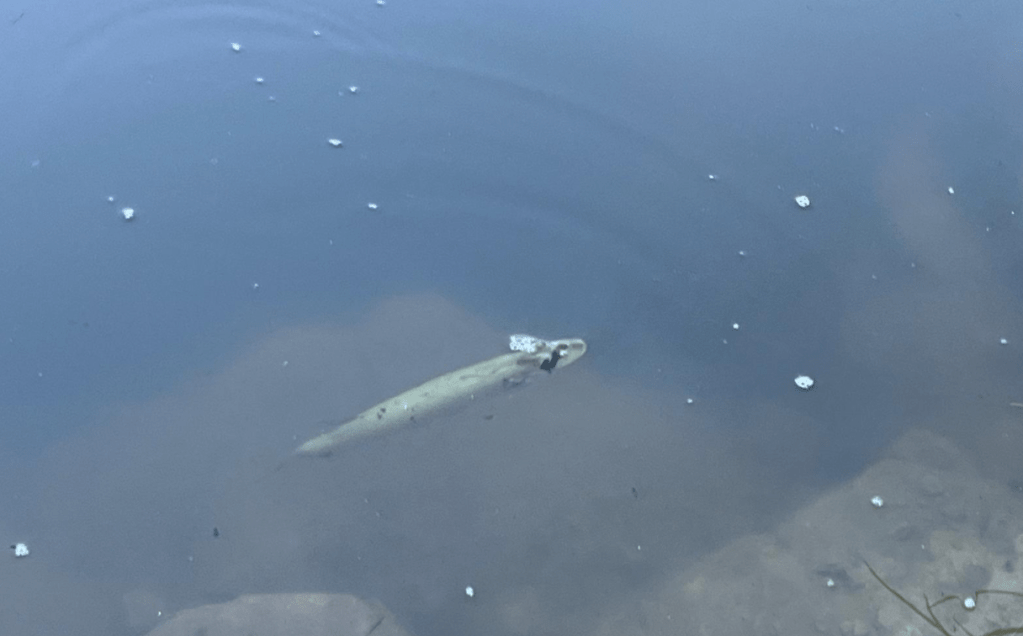
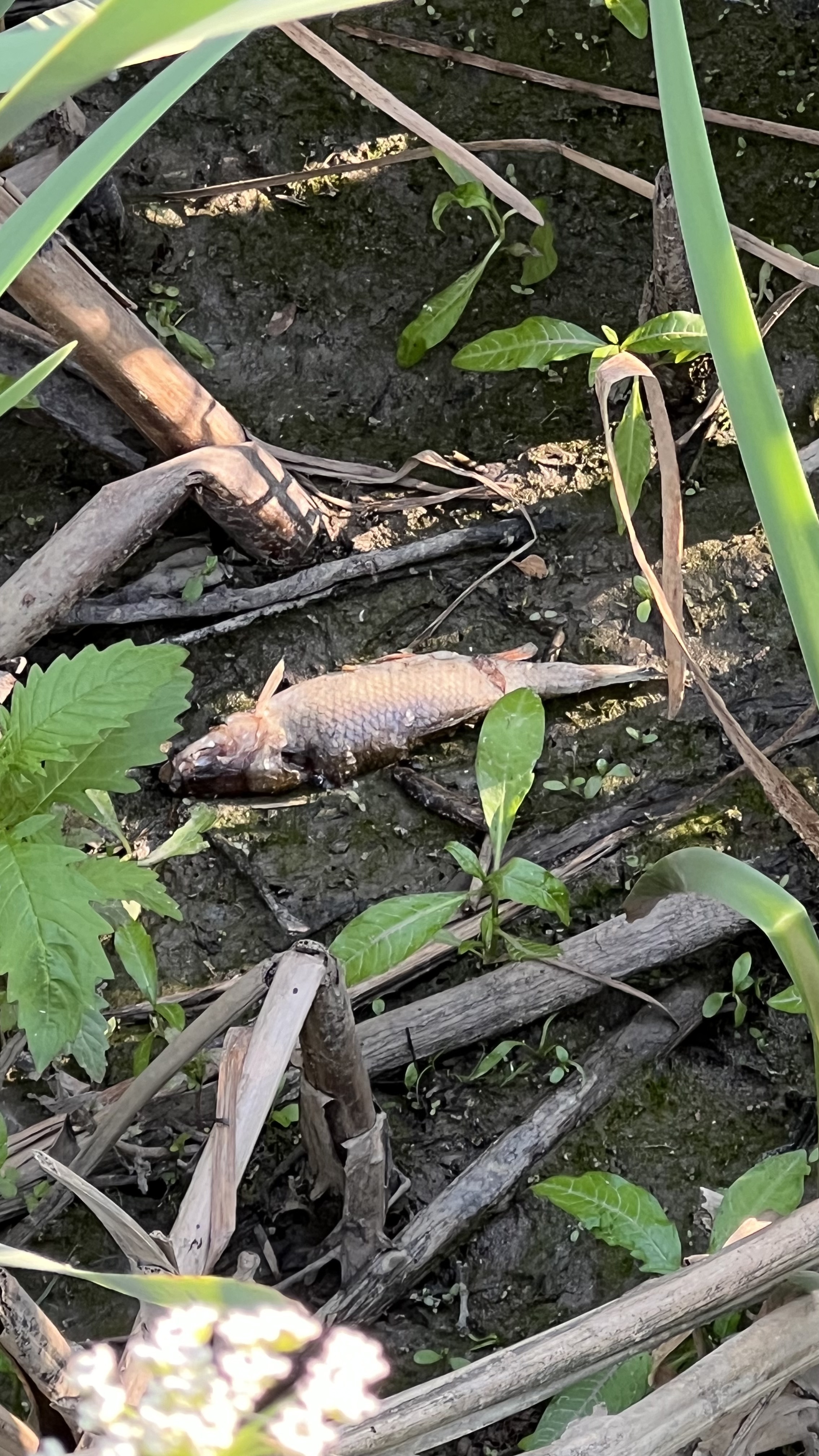
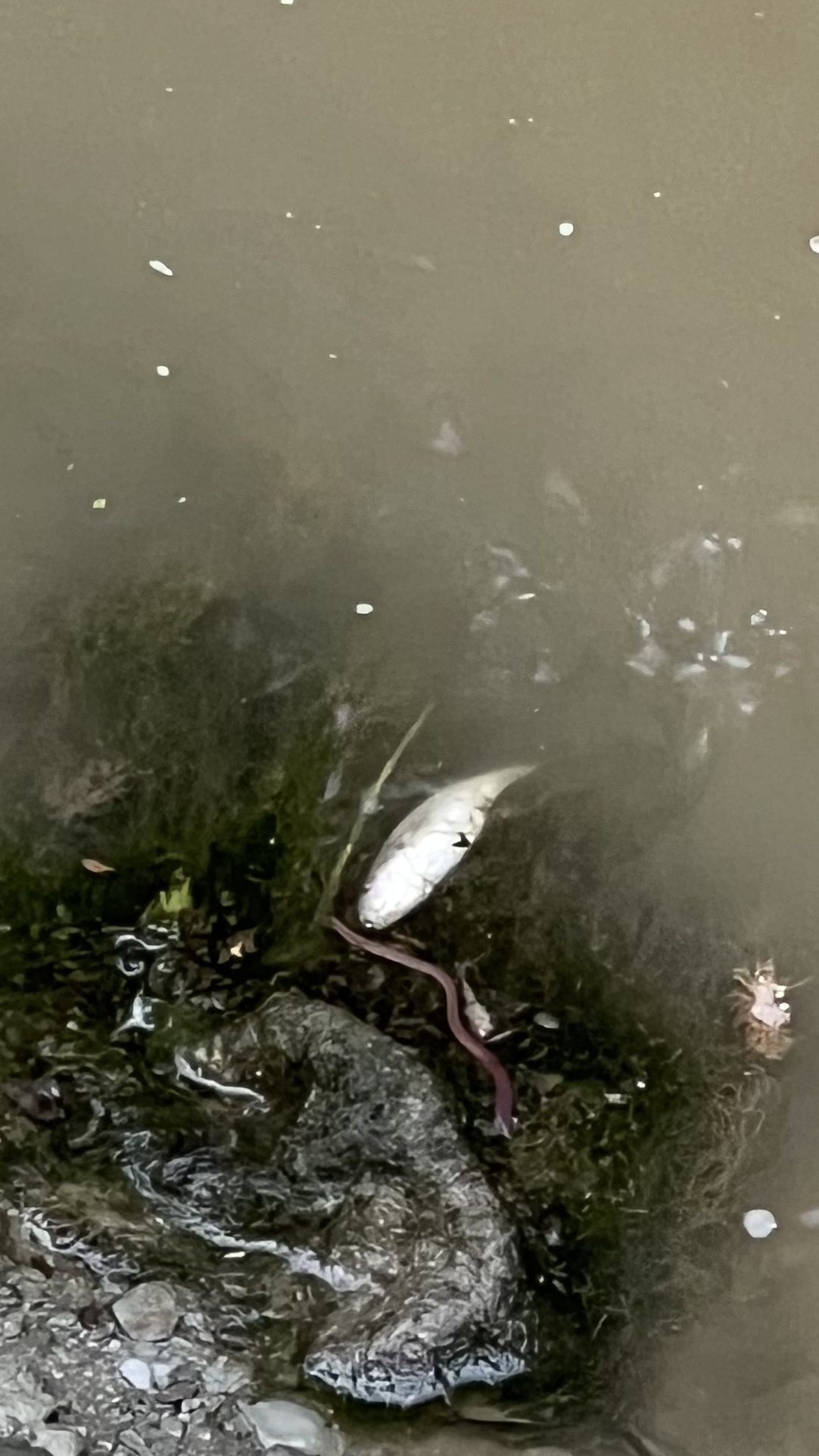

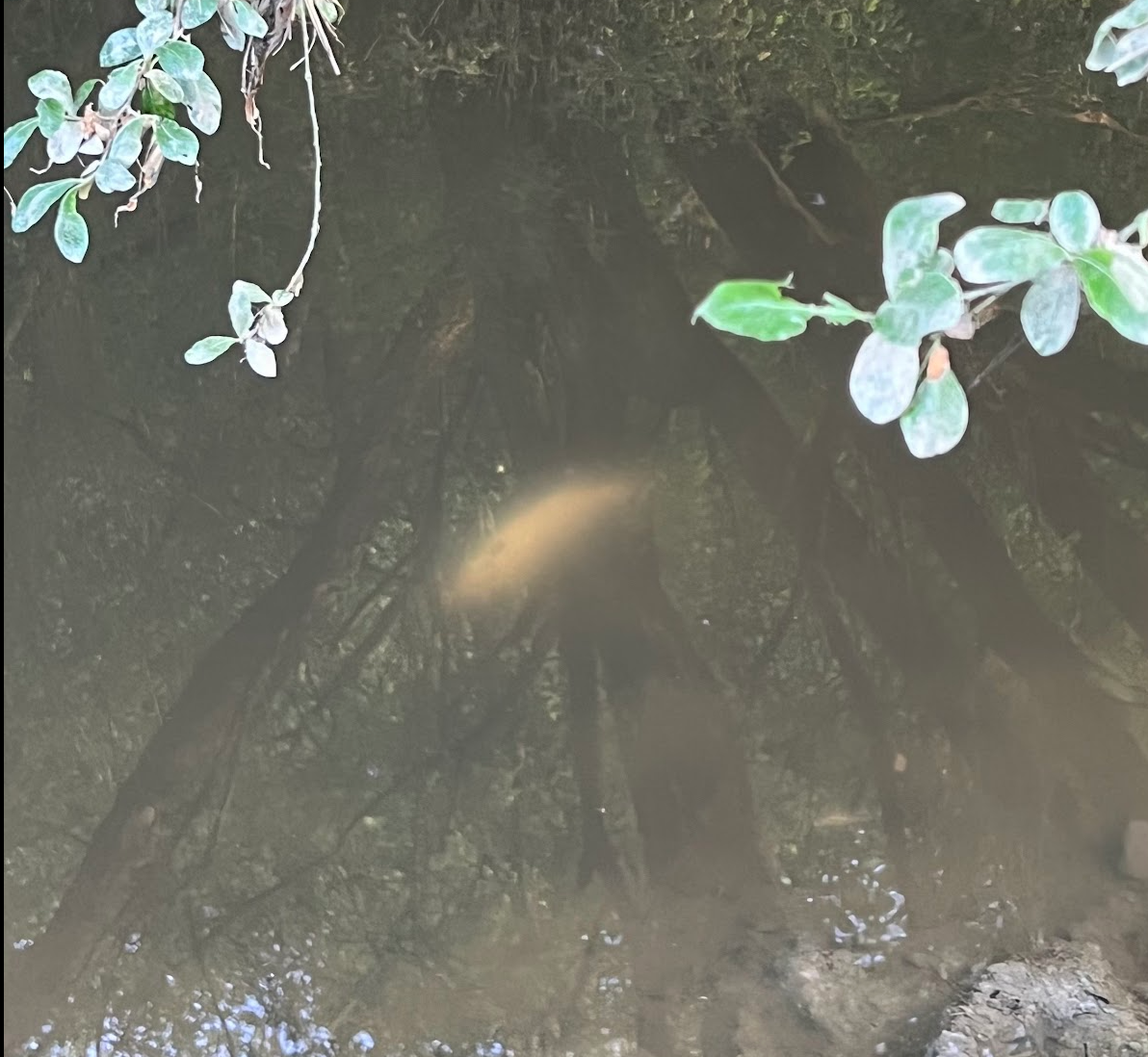

A shoal of fish, clearly distressed and gasping air, were seen collecting against a gabion structure at a culvert entrance.
Further upstream, in wider, deeper slow flowing pools, groups of larger fish were seen vertically “dangling” and floating in circular motion mid-stream with mouths gaping above the surface. I’m not an angler or fish expert but their behaviour seemed far from normal and these fish appeared to be severely stressed.
It was the first time I had witnessed a scene of dead and dying fish like this and it was upsetting to see animals suffering. It is difficult to estimate the number of dead fish due to difficulty of access to observe the river and limited time in which to survey the entire length (over 1km) plus of course the flow may have taken some fish downstream away from where we were looking. This is a small stream and, in the stretch we looked at, I would estimate total deaths may have risen into the hundreds given the randomly spaced sample I took over a 1km stretch.

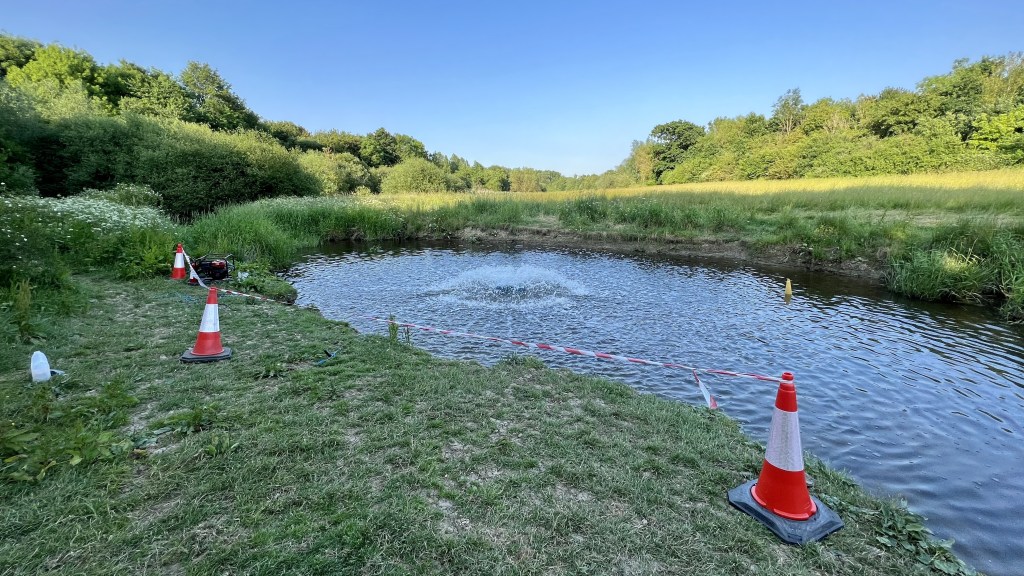
Emergency measures to mitigate the impact of die-off were initially carried out by Gatwick Airport. Their team was first on the scene with re-oxygenation pumps running 24/7 from the afternoon of Monday 12 June. A team from Thames Water arrived later at 3:00am on Tuesday 13 June with two pumps spaced at intervals upstream from the larger LGW pump.

On my second visit to the site the interventions appeared to be working as I observed no fish struggling at all and, while there were some dead fish here and there probably from the day before, we also saw some lively fish darting around in shallower riffles so the appearance seemed to me more healthy. I had helpful conversations with both teams and the Environment Agency and, as usual, found everyone very helpful and willing to share information and understanding of the incident. This kind of transparency with the public is absolutely the way forward so that we can cooperate together to identify issues and solve problems. I would like to extend my thanks to those who attended, some of whom did shifts overnight night.
https://www.bbc.co.uk/news/uk-england-surrey-65890884
What caused this die-off?
At first, the thinking was that fish death must be related to some sort of point pollution discharge upstream in Man’s Brook towards Charlwood. Indeed, a 3 hour sewage outfall had occurred during the thunderstorm the afternoon before at Charlwood sewer overflow (SO) upstream. On arrival, this was considered to be a prime suspect along with thoughts of farm runoff or road wash-off in the thunderstorm the day before. The airport was another potential source of pollution. However, runoff from Gatwick is captured in holding ponds, continuously tested and sent for treatment if it falls below a safe standard. Water quality management in the airport and any discharges from the airport are some of the most strictly managed in the catchment and so this too proved to be an unlikely source. Accidental discharges can occur but none have subsequently been reported.


It was tempting to think it was simply the result of continued untreated outfalls which had ravaged the river during the rainy Spring. Indeed, data showed the sewer outfall at Charlwood had reliably overflowed every time it rained in recent records back to December 2022. There were no dry discharges and seemingly no faulty sensors.
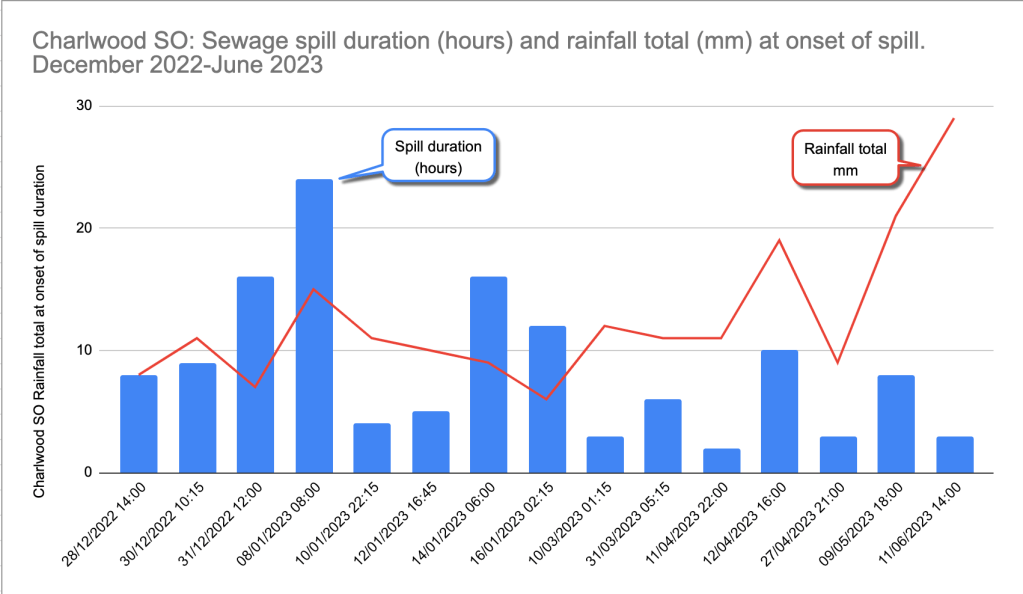
As an aside, the duration of overflows from this SO appear to have decreased since December (blue bars). Furthermore, the amount of rain required to trigger an outfall appears to be increasing, which might indicate progress towards better performance showing that it doesn’t spill as readily. The red line shows lower rain totals appeared to trigger longer duration spills back in December whereas in May and June higher rainfall totals were required to trigger outfalls that were shorter in length. This may be a response to different rainfall intensities but it seems to indicate there’s nothing faulty about this SO and there was definitely a discharge during the thunderstorm.
However, our test data showed this sewage outfall event was very unlikely to have been responsible for this fish death event. On this occasion, Thames Water was “off the hook”, so to speak.
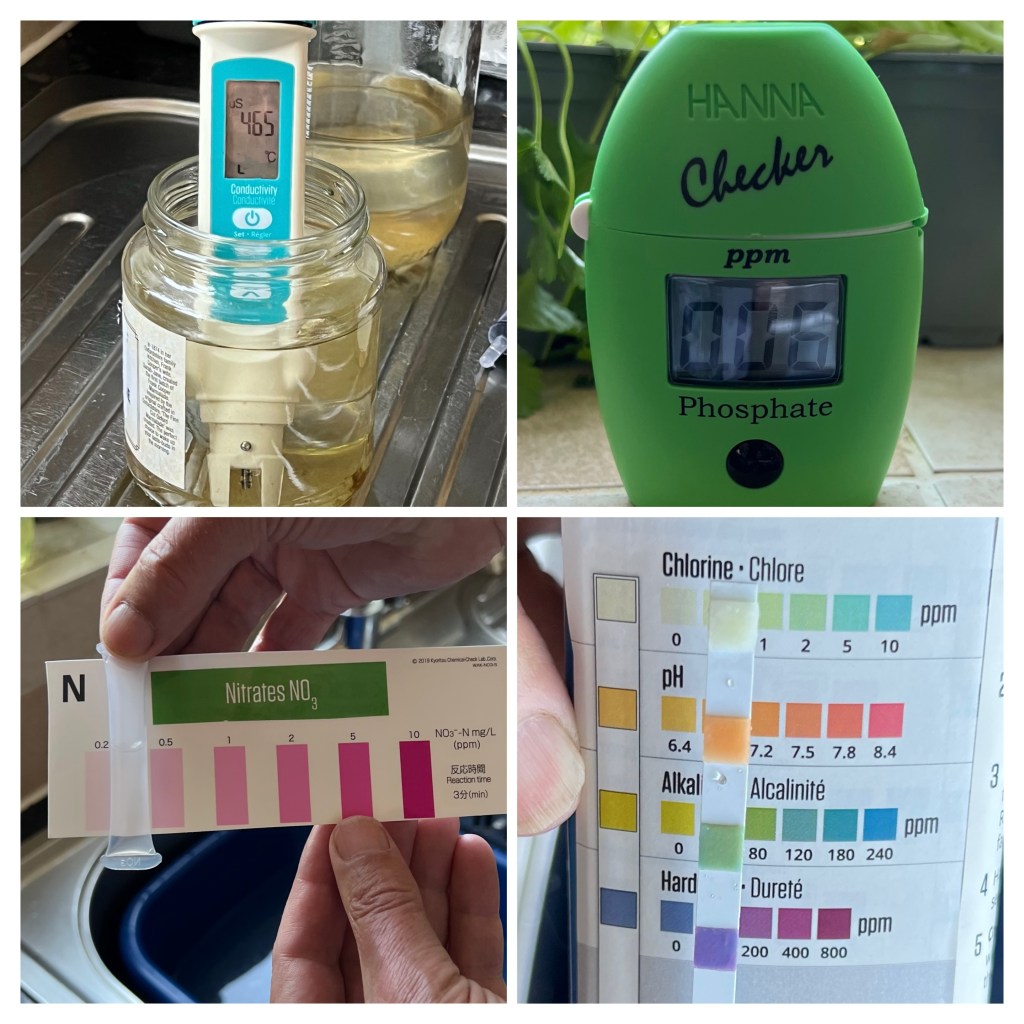
Our water quality tests and those of the Environment Agency and initial investigations by South East Rivers Trust (SERT) all strongly suggest something else had caused the widespread death of hundreds of fish along this stretch of river.
Our results showed 0.06ppm Phosphate levels which is very low and, ironically, one of the lowest recorded levels on the River Mole in our recent catchment wide testing programme. Nitrate levels barely registered at 0.2ppm, the lowest category on the colour charts, pH appeared neutral at around 7.2, Alkalinity 80-100ppm, Hardness 100-200 and highest conductivity recorded was 475µ/cm. These test results suggest very little impact from sewage dumping or agricultural runoff. They indicate water quality along this stretch of river was, if anything, ecologically “Good”.

This perhaps should not be surprising given the high quality riparian habitat and the careful management by Gatwick ecologists and hard work by Gatwick Greenspace to create the best environment possible.
The clincher was the Environment Agency riverside test for oxygen content. Their result of 8% dissolved oxygen meant that the cause of fish death was almost certainly low oxygen. This die-off event was highly likely to have been caused by an oxygen crash.
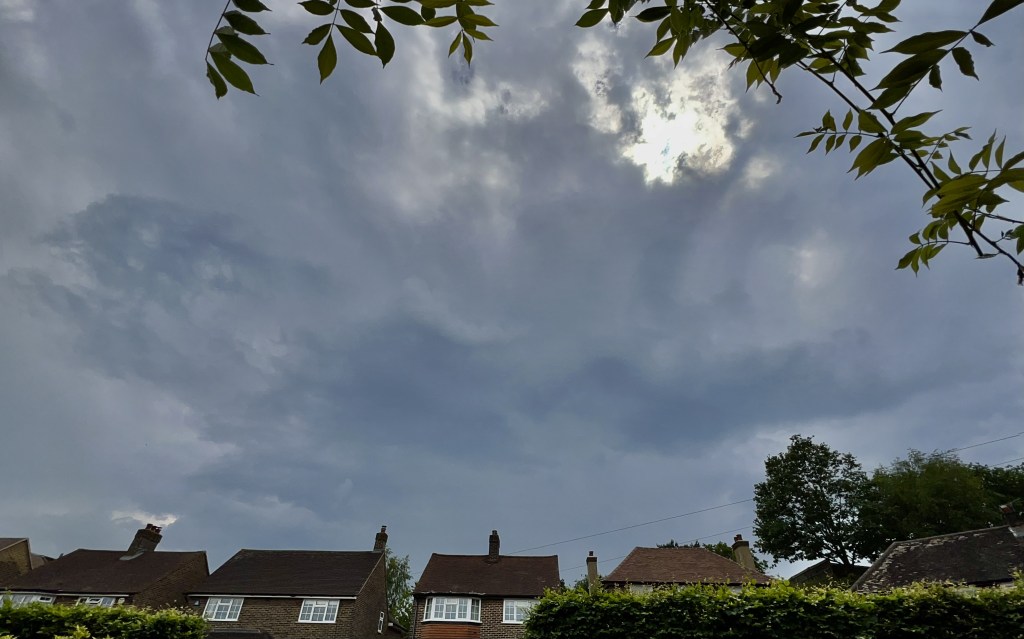
A combination of the long dry spell of 31 days, the hot days immediately prior to the thunderstorm and the heavy rain during the thunderstorm on Sunday is likely to have caused the oxygen crash in the river.
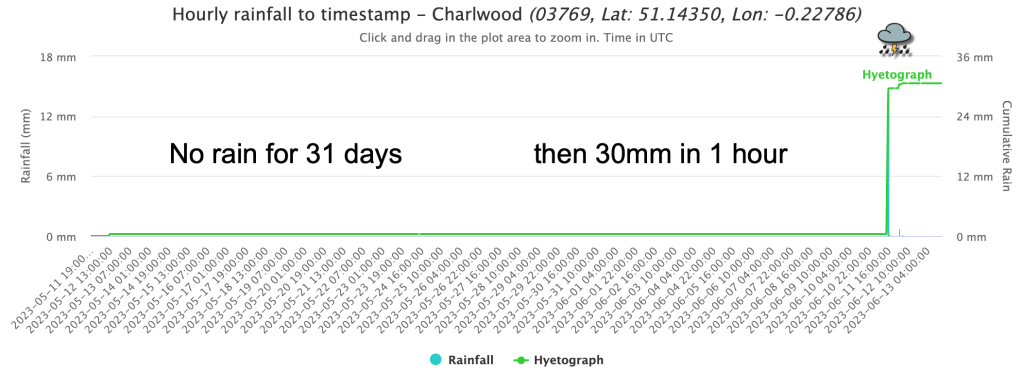
During the 31 day dry spell no rain fell at all and river levels in the Upper Mole catchment fell to well below typical range. Prolonged spells of dry weather spaced with heavy thundery downpours are recognised to be a characteristic feature of climate change.
At low flow most of the water in the Upper Mole is made up of treated effluent discharge. At this very low level, the rhythms of human water usage are shown as peak “flushes” twice daily when the flow is this flow.
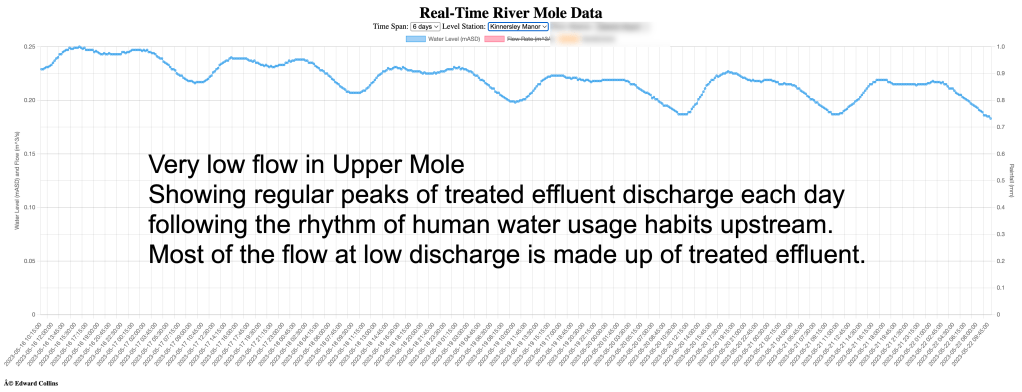
Whilst treated effluent should not, by itself, be damaging to fish, the combination of weather events that followed proved to be deadly and perhaps show the limitations of effluent treatment standards in a warmer world with more extreme weather.
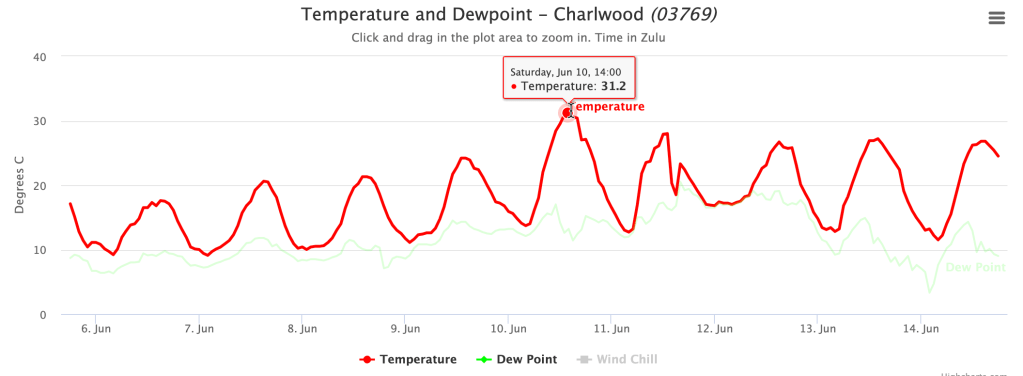
The low river flows combined with the increasingly hot (30C), sunny and windless days immediately before the thunderstorm. These conditions may have caused the water to become depleted in oxygen and perhaps in deeper pools, thermally stratified.
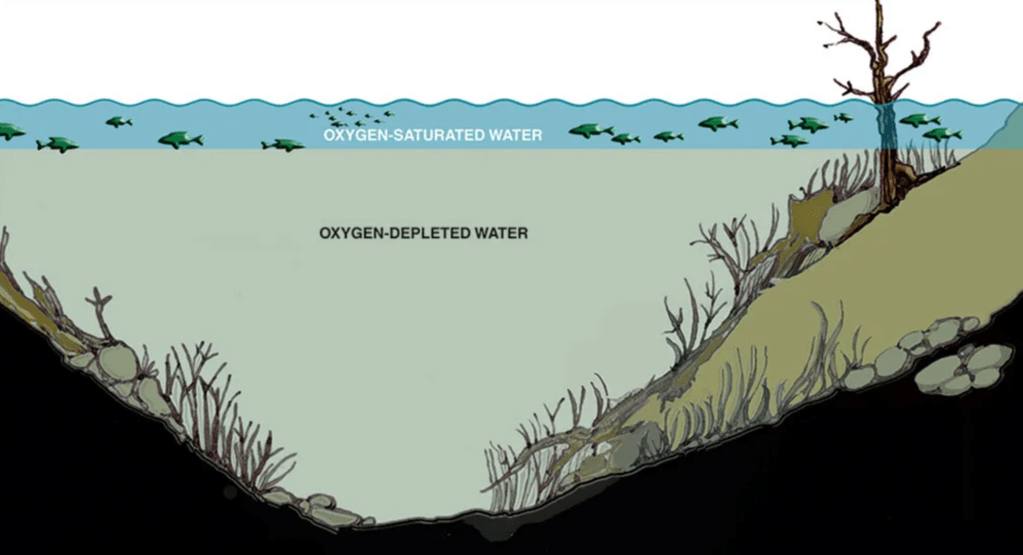
When wind speed reduced the water could not circulate and surface diffusion from atmospheric oxygen was limited. Along with this, low flow conditions may have meant deeper water in pools became stagnant as there was little mixing of surface water.
It is somewhat speculative but this may have been the river condition as the thunderstorm arrived in the afternoon of 11 June.

The Mole received heavy and, in places, torrential rain in the thunderstorm over parts of north Crawley, Hookwood, Charlwood and Horley. In some places the storm dropped up to 30mm of rain in a few hours. In a few locations up to 20mm in one hour was recorded. It was by no means an extreme weather event, but rather a typical heavy summer thunderstorm with a return period of around 5 or 6 years.
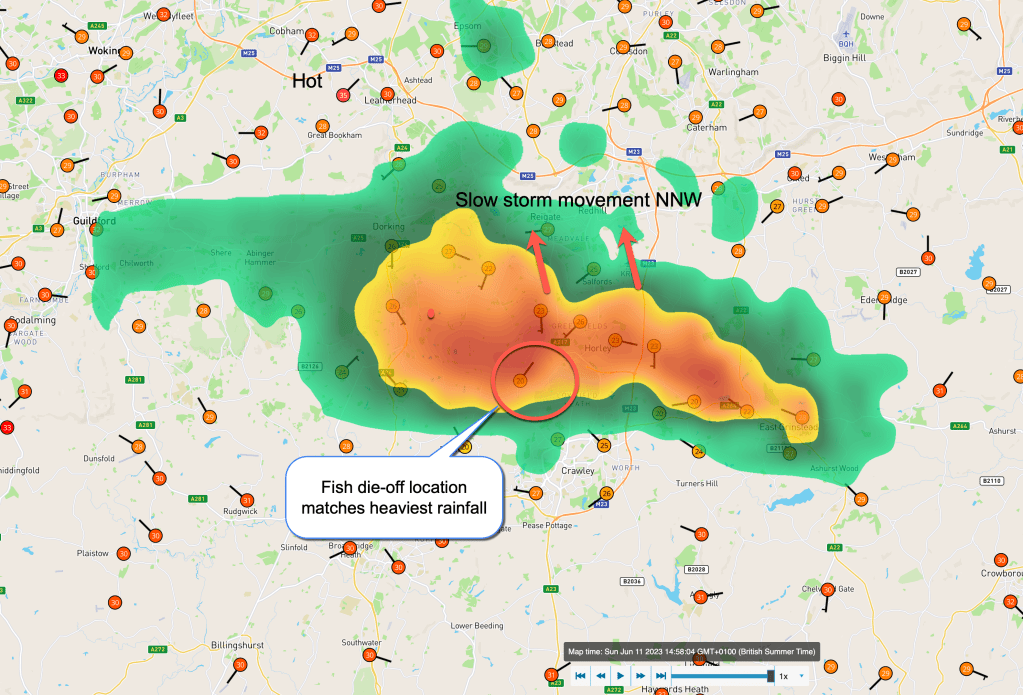
Being summer, the rainfall was largely intercepted by vegetation and evaporated or held up in vegetated water courses. Very little runoff got to the river and only a brief modest rise in level occurred before returning to low flow shortly afterward.
At Gatwick gauging station, shown by the hydrograph below, the river level before the storm was very low at just 0.172m asd (lowest recorded 0.108m) rising to 0.453m asd within 1 hour, which is a very quick lag time. However the discharge was still only 0.4 cumecs at peak flow which is still very low flow indeed.
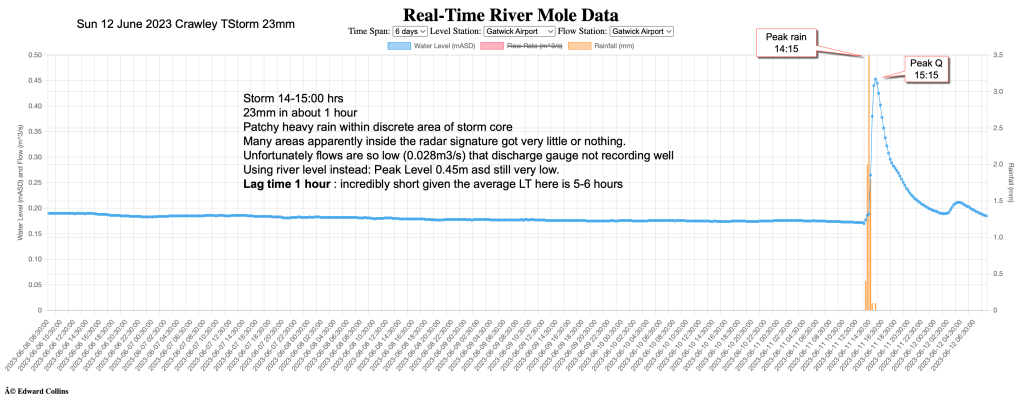
Importantly the heaviest rain appeared to fall directly over the stretch of river in question, between Charlwood and Horley. It was, however, extremely patchy rain and many places close by got no rain at all.
The oxygen crash occurred in the stream when the top water layer cooled down from the heavy rainfall and mixed with the deeper water which contained little to no oxygen. In addition to any existing low oxygen levels, heavy rain following a dry spell may have flushed out stagnant water from drains into rivers and this exacerbated low oxygen levels. However, the discharge was so low that this seems less likely. Either way, fish were left stranded with nowhere to go for oxygen rich water and were left suffocating and desperately gasping for breath at the surface.
Conclusions
Sadly this is not an isolated incident this year and numerous reports of fish deaths are circulating in the media and social media from the same period. Below are some fish death headlines from recent days. They attribute the same cause of high temperatures and thunderstorms causing an oxygen crash. Some reports mention these extreme mass deaths have never been witnessed before while the Manchester Ship Canal Company was keen to stress it is a natural occurrence, about which there is “nothing we can do”.
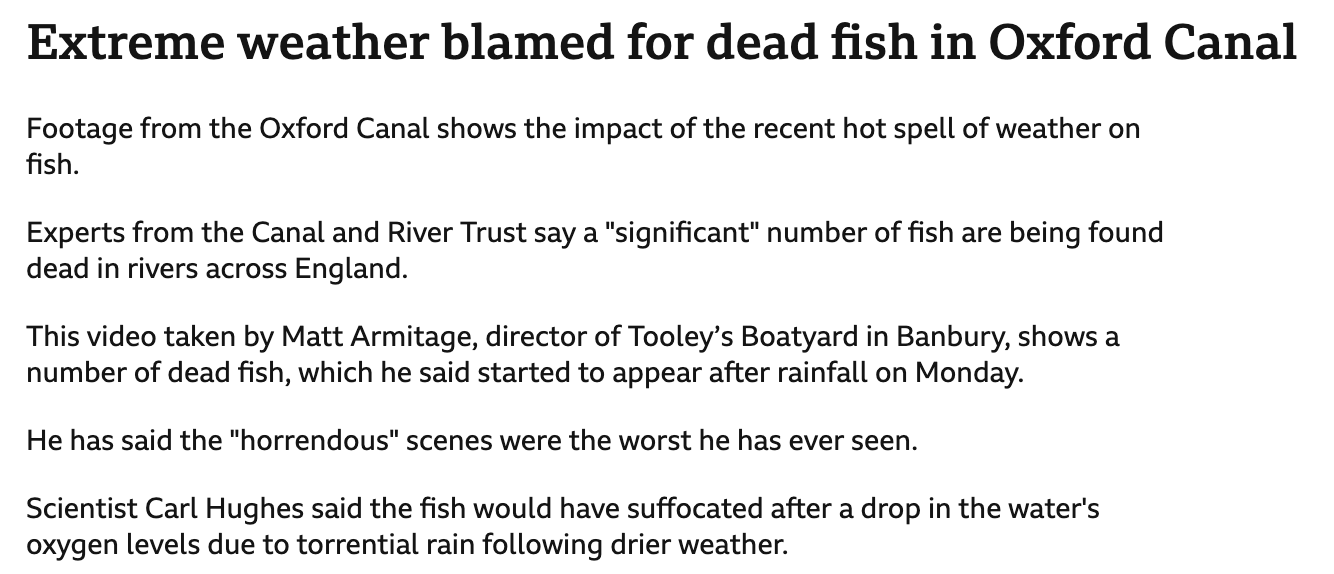


“Low pressure” is frequently mentioned in the mix of causes and, to be honest, I am not yet sure if “low pressure” per se is involved directly with the dissolved oxygen content of water (perhaps controlling solubility or net flow of O2 between air and water?) or whether they are simply connecting it to the low pressure which is obviously part of thunderstorm activity. Please comment below if you know more about this.
It would require a proper attribution study to scientifically prove these occurrences are becoming worse or more frequent due to climate change or whether these die-offs have occurred regularly in the past with no change in trend or correlation with longer duration dry spells and intense rainstorms. Almost regardless, for now the response amounts to the same: we need to manage our rivers to minimise these events moving into a future where weather patterns are likely to risk making mass fish deaths and damage to habitats more frequent.
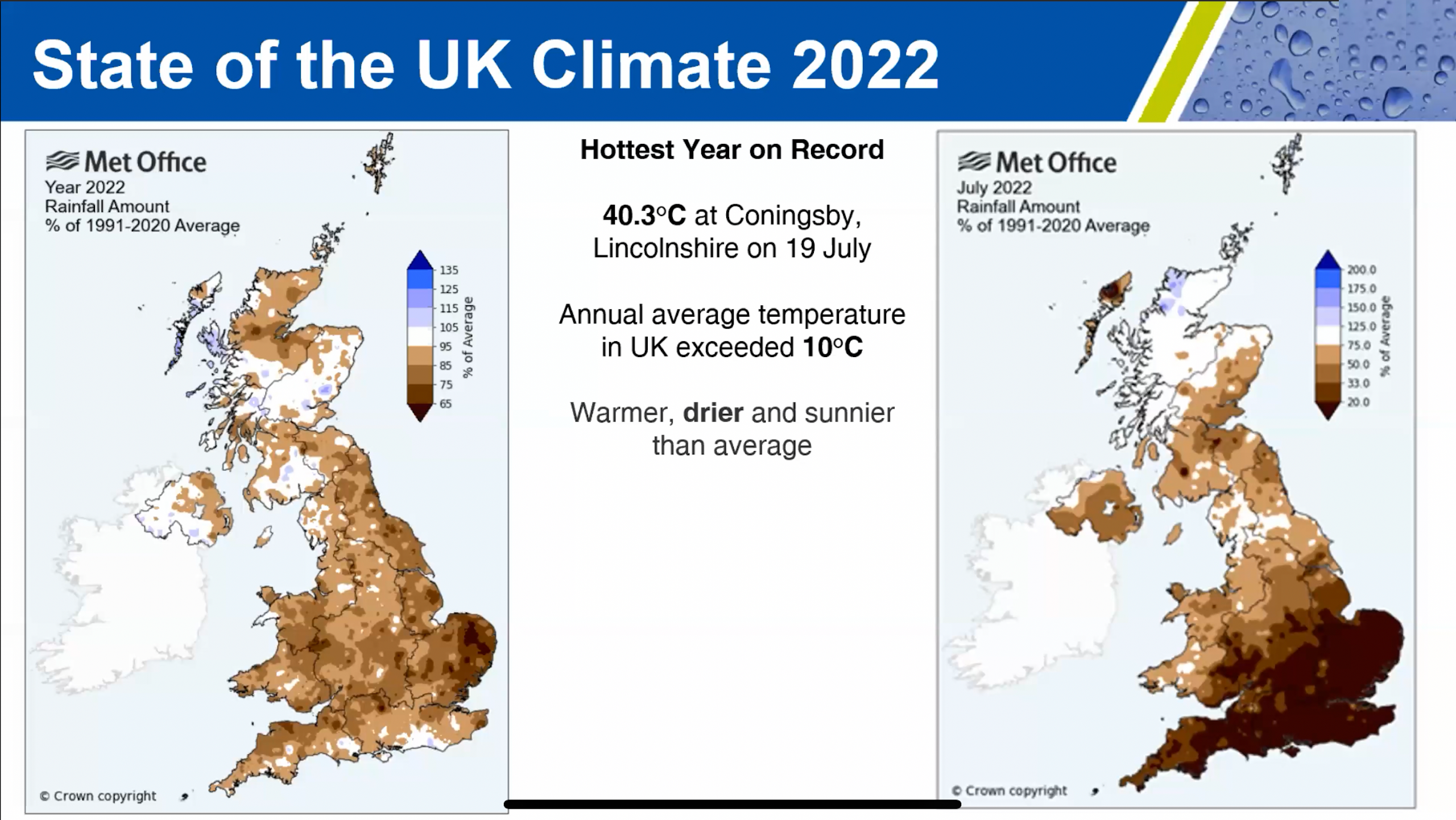
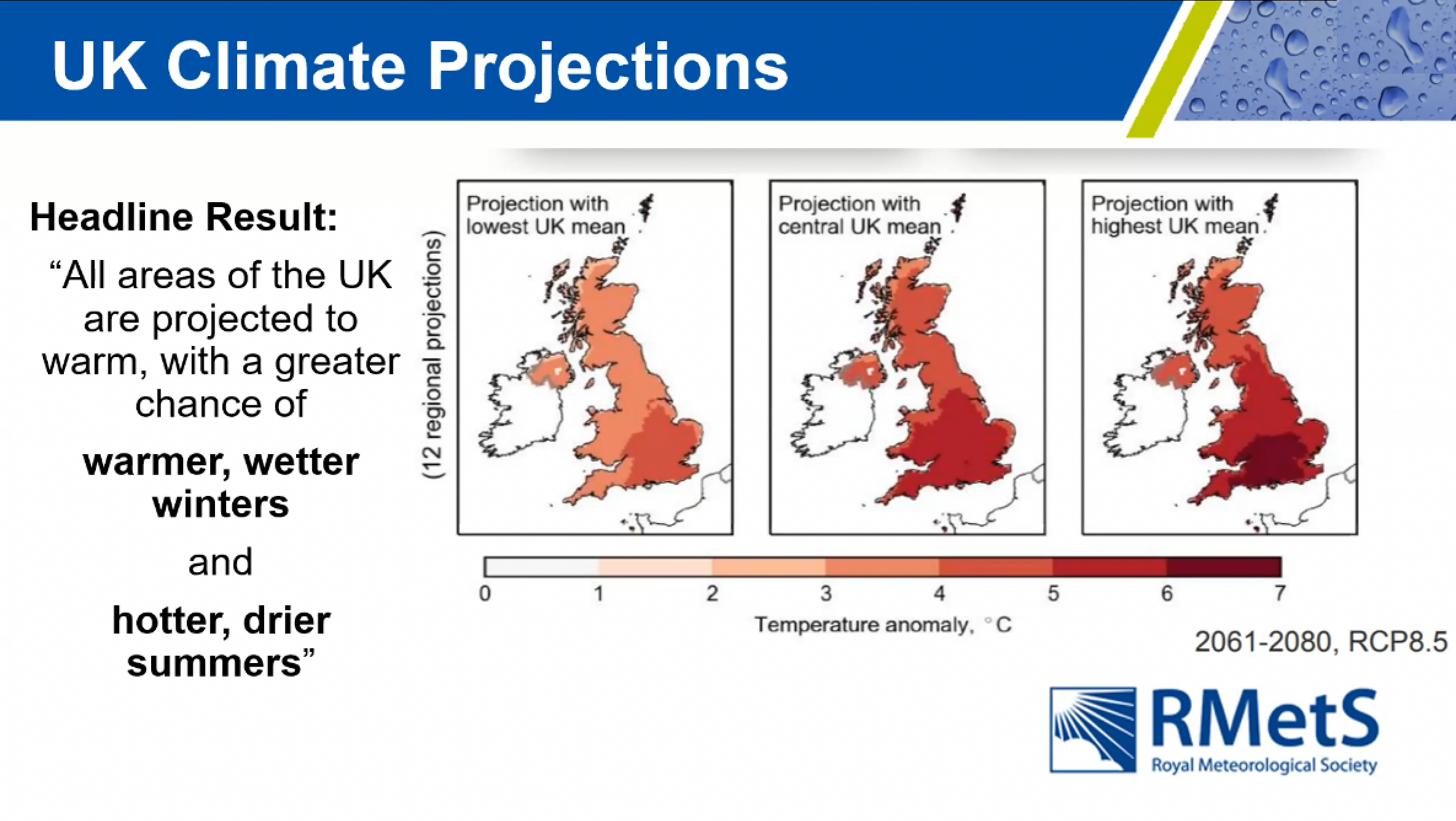
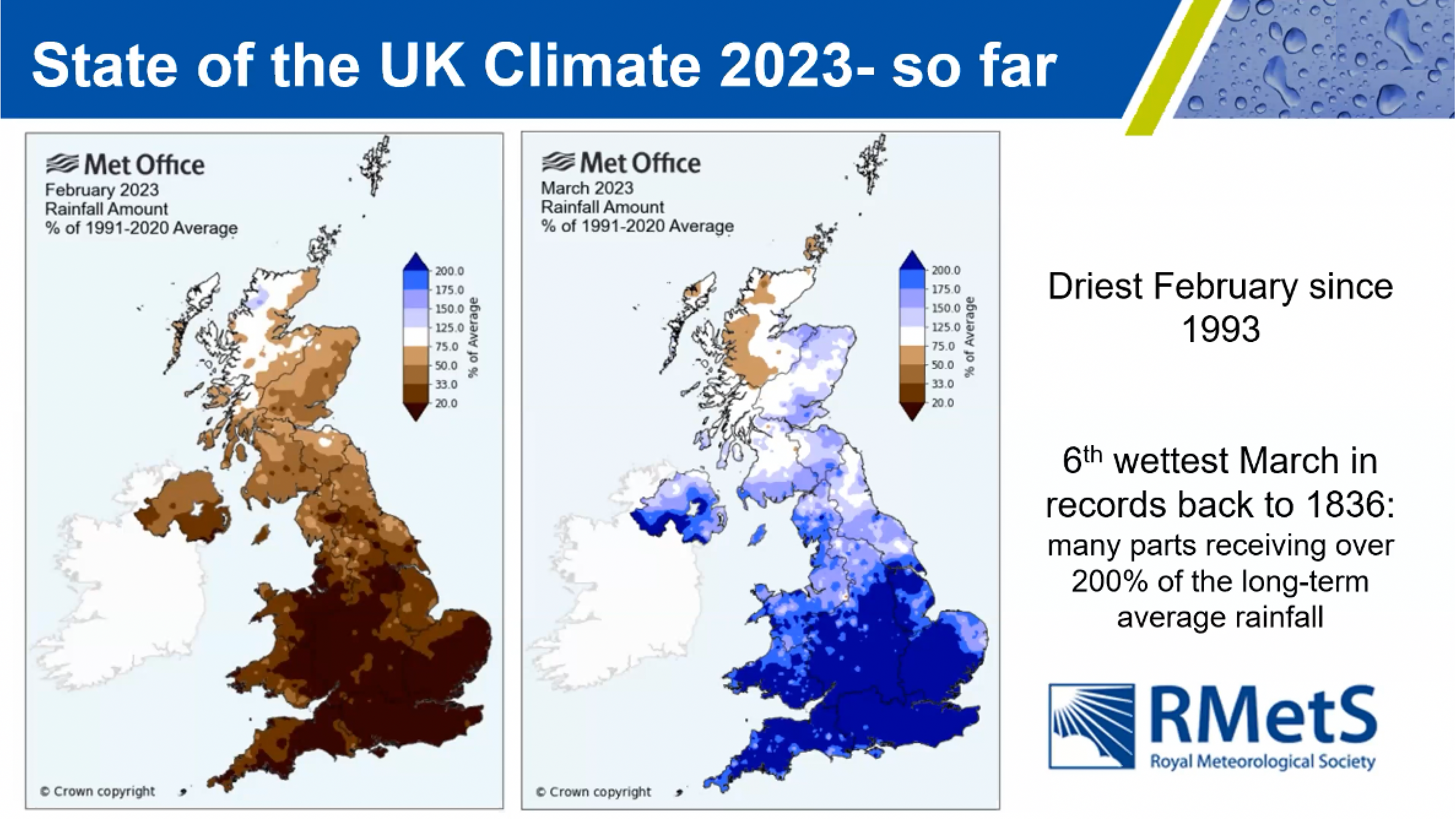

It’s also possible to argue that our entire weather pattern is now sitting in a new climate regime so the need to attribution is unnecessary.
For me, the absence of acute pollution, test results showing desperately low dissolved oxygen and the occurrence of a prolonged dry weather pattern increasingly associated with climate change, all suggest it is reasonable to think this die-off event was an impact of climate change in the River Mole drainage basin. This means that solving it will not be simple, quick or straightforward.
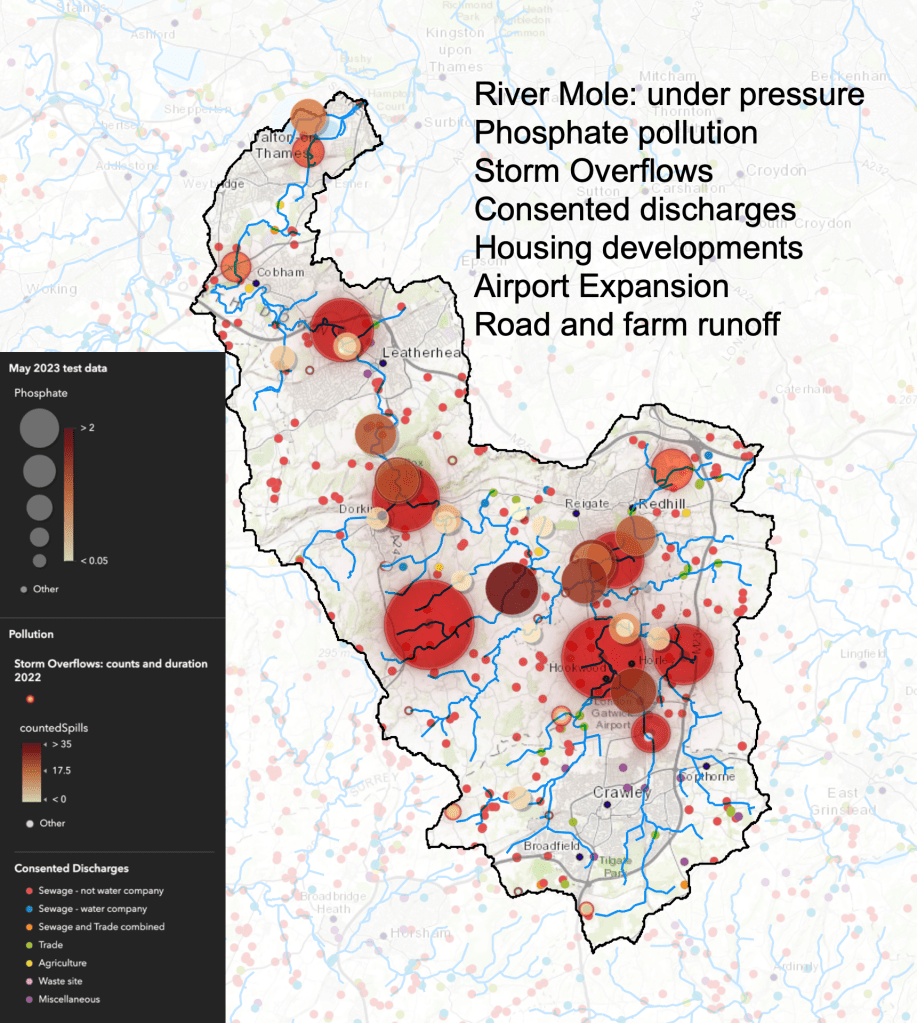
The Mole catchment is under increasing pressure from several directions: huge housing development plans across the Upper Mole flood plain, pressure on sewage treatment, population increase, road traffic increase and airport expansion plans to name a few.
However, there is a wide spread determination amongst stakeholders, custodians of the river, regulators, industry and our own River Mole River Watch group that improvements to the Mole are needed. Solutions to improve resilience might include using natural flood management techniques in the upper tributaries, reconnecting the river to its flood plain across a wide area of the Mole flood plain, installing wetlands to absorb pollution and provide wildlife refuge and much more.
River Mole River Watch is working with agencies to ensure this happens as quickly and effectively as possible so that disastrous events like these become a thing of the past.
Thank you so much for reading. Our newly formed small charitable group is called River Mole River Watch. We will have a website soon which will work alongside this one which will continue to host longer analysis pieces to complement the river news items, testing and monitoring news and community activities that our RMRW site will include.
References
Charlwood charts from the excellent Starlings Roost weather site http://starlingsroost.ddns.net/weather/ukobs/ukgraphs.php?synop=03769&startdate=2023-06-10&starttime=18%3A00&enddate=2023-06-11&endtime=18%3A00&datatype=SYNOP
Causes of low dissolved oxygen https://atlas-scientific.com/blog/causes-of-low-dissolved-oxygen-in-water/
All photos are my own.
Mole hydrographs courtesy Ed Collins
Recent Fish death occurrences elsewhere:
River Avon: https://www.bbc.co.uk/news/uk-england-coventry-warwickshire-65919052\052
Oxford https://www.bbc.co.uk/news/uk-england-oxfordshire-65906123 : He has been working on the water for more than 30 years and said the “horrendous” scenes were the “worst ever seen”. Extreme weather blamed for fish deaths https://www.bbc.co.uk/news/av/uk-england-oxfordshire-65909711
Salford Quays, Manchester https://www.bbc.co.uk/news/uk-england-manchester-65902910 A spokesperson for the Manchester Ship Canal Company said: “We appreciate that people will be curious to know if there is something wrong, but it’s important to know that fish kills in warm weather are common as the water is less able to hold oxygen. They added: “Unfortunately, there is nothing we can do to prevent this natural occurrence.”
Weymouth Lake https://www.bbc.co.uk/news/uk-england-dorset-65320592

 The Mole Story
Leave a comment