
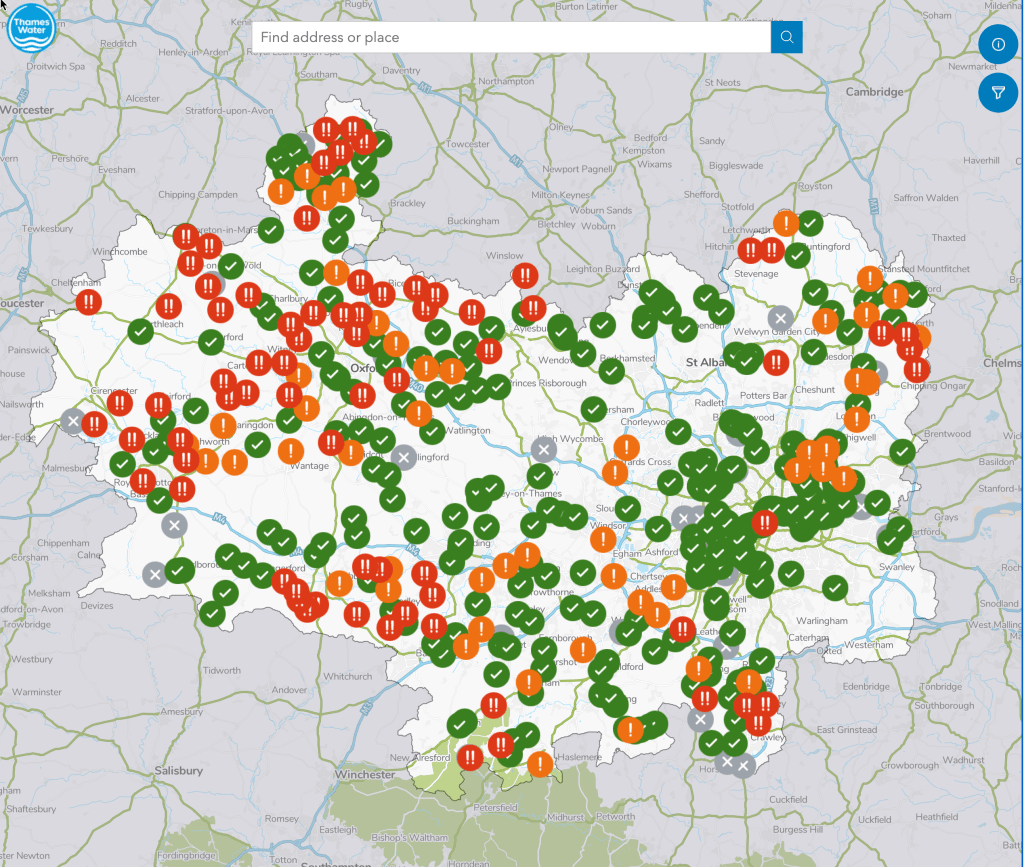
Some significant news on river pollution! Thames Water have today 4/01/2023 released a “live” map showing near real-time data on storm discharges at their sewage treatment plants. This is useful to identify how often and how long storm overflows occur.

Thames Water want to be more transparent and open about their storm discharge activity.
We think any discharge of untreated sewage is unacceptable, even when it’s legally permitted. So, we’re taking initial steps to make the use of storm overflows unnecessary.
Thames Water https://www.thameswater.co.uk/about-us/performance/river-health/investing-in-river-health
The live map is a step in the right direction and can be used to engage with the company about how we reduce pollution in our rivers.
We’ve developed a detailed programme for reducing the number of overflows from our sites. This includes removing surface and/or groundwater from our sewers in some cases. Our long-term aim is to get rid of all storm overflows.
Thames Water
However, right now the data doesn’t look good, for example you can see that several STWs are discharging storm overflows into the River Mole today. Leatherhead for example has been discharging for over 180 hours since 27/12/2022!


River levels have been quite high since Christmas, with regular rainfall causing discharge at Leatherhead to approach flood levels. However, these are by no means unusual winter conditions and are within “typical range”. So understanding how rainfall correlates with storm overflow events and duration will be interesting to watch over the coming months.

I think engagement is the way forward. There are several excellent groups actively working with Thames Water to reduce pollution locally in the River Mole catchment. Friends of the River Mole, for example, are based in Leatherhead, and they carry out pollution testing and meet regularly with Thames Water to actively improve the river.
https://www.thameswater.co.uk/edm-map: News! Real-Time storm discharge data now available from Thames WaterWe monitor our STW, upgrading them where needed. This makes sure that they continue to treat incoming flow to the required standards. When the treated effluent is discharged, rivers and streams should be adequately protected.
https://www.thameswater.co.uk/about-us/performance/river-health/investing-in-river-health
However, sewers can become overloaded in times of high rainfall filling storm tanks designed to store this overflow otherwise homes and streets could become flooded with rainfall and foul water. Storm discharges are designed as a safety valve as the pressure on our sewage system increases due to increased population, urbanisation and impermeable surfaces, misconnections and misuse of drains and toilets causing blockages from fatbergs and wet wipes and increased rainfall intensity due to climate change. These are all adding pressure to our water treatment infrastructure. A lack of investment in updating infrastructure has a part to play as well. The issue of river and coastal pollution has been brought to public attention in recent years not least by the incredible campaigning work of Feargal Sharkey.
Storm tanks in sewage treatment plants are designed to store the excess rainwater and foul water unable to be processed normally. If storm tank capacity is exceeded then an overflow takes the mixture of rainwater and sewage into the river. This mixture is called “storm discharge” and should be very diluted foul water which has had some minimal treatment, for example solids settling out in the tank and primary screening of wet wipes and other debris. Thames Water are permitted storm discharges by the Environment Agency under certain conditions, for example during heavy rain. They operate automatically and are not “switched on”. Sometimes dry discharges occur at other times, for example after heavy summer storms but also when their are accidents or mistakes. There is a lot to understand about how STWs and water companies operate and how investment has been lacking over the years which, in combination with population increase and climate change has caused the pollution problem we have now. However, in a meeting with Thames Water recently I was impressed and heartened by their open engagement with Friends of the River Mole. I hope this is a productive way forward in making significant improvements to the health of our River Mole.

Back in 1858 the River Thames “Big Stink” caused the public, the media, water companies and Parliament to come together to solve the problem. The resulting project by civil engineer Joseph Bazalgette involved building thousands of miles of sewers which solved the problem for the Victorians. The overwhelming, almost universal, support for this extraordinary infrastructure project was likely due to people being disgusted by the stink around the Thames which they experienced everyday. Nowadays we are perhaps shielded from the big stink and take fresh water and toilets for granted… literally flushing away the problem and forgetting the nasty bits. Thames Water are currently building the Thames Tideway project which is a truly enormous undertaking and should be receiving more attention than it is. Public engagement is high but somehow still not at the level required to universally support the enormous investment needed to solve our current river pollution problems, yet.

 The Mole Story
Leave a comment